
Oklahoma Has No Complete Index
Oklahoma does not provide the public with one complete statewide warrant database. Courts and law-enforcement agencies use criminal-justice networks that ordinary users cannot search. Public clues are spread across OSCN District Court dockets, issuing Court Clerks, county sheriff warrant or most-wanted sources, and city municipal courts. A name absent from one source may still have an active order in another county, city, state, federal, or tribal jurisdiction.
Judges issue warrants through the court with authority over the matter. The responsible sheriff or other law-enforcement agency executes an arrest order, while the issuing court controls recall or quash decisions and bond terms. A local roster is only as broad and current as its stated coverage. Most-wanted pages are selective publicity lists, not full indexes. The Oklahoma county directory helps identify every local office that must be checked.
Note: Absence from one sheriff list cannot negate a warrant issued by another county, city, tribal, federal, or out-of-state court.
Oklahoma Warrant Record Types
The issuing purpose determines what can be public and where the record sits. Some orders appear inside an existing criminal or traffic docket. Others are sealed during an investigation or held in a separate city system. Common Oklahoma warrant types include:
- Arrest warrant: authorizes custody based on a judicial finding of probable cause for an alleged offense.
- Bench warrant: directs arrest after a missed appearance, noncompliance, probation issue, or contempt in the issuing case.
- Search warrant: authorizes a defined search for evidence; the affidavit or unexecuted process may remain sealed.
- Fugitive warrant or hold: reflects another jurisdiction's process and possible extradition or continued custody.
- Traffic failure-to-appear warrant: can arise in municipal court or District Court depending on the cited law.
- Civil body attachment: is coercive process in limited support or contempt settings, not an ordinary unpaid civil judgment.
Search Oklahoma Warrant Records
Start by listing every place linked to the event. Include the county or city of arrest, citation, missed hearing, probation case, or child-support proceeding. Residence alone can mislead. A city citation may stay in a municipal court, and an Oklahoma City address does not automatically identify the filing county. The citation, caption, arresting agency, and prior case number are stronger clues.
- Select each likely county in the Oklahoma county directory.
- Search the county in OSCN Docket Search by full name or known case number.
- Read recent events for warrant issued,
BW,BWIFA, returned, recalled, quashed, bond, and failure-to-appear language. - For city tickets, search or call the issuing municipal court because municipal coverage is not comprehensive in OSCN.
- Check the official county sheriff warrant or most-wanted source where one exists, then call its warrants or non-emergency records unit.
- Resolve conflicting information with the issuing Court Clerk. Ask for status, bond, next setting, and the court's recall or surrender procedure.
Search aliases, former names, suffixes, and spelling variants. A narrow date range can help distinguish common names. Do not publish a full birth date or protected identifier merely because a portal displays part of it. Save the county, case number, search date, and exact status language, then refresh before making a consequential decision.
Oklahoma Warrant Search Fields
There is no uniform Oklahoma public warrant form, so fields vary by OSCN, sheriff, and municipal source. The standard inputs below show what a researcher should gather. OSCN requires selection of the relevant county or court database before a name or case search can produce useful results.
| Field | Use | Search Caution |
|---|---|---|
| County or court | Selects the likely issuing database. | The same case pattern or name can exist elsewhere. |
| Case number | Targets the underlying criminal, traffic, support, or contempt file. | Retain the prefix, year, sequence, and county. |
| Last and first name | Finds a person when no number is known. | Start broad, then add fields to avoid suppressing a match. |
| Middle name or suffix | Separates similar identities. | Try recorded variants and do not silently drop Jr. or Sr. |
| Filed or closed dates | Limits results near the event. | A warrant can issue long after the original filing. |
| Case type | Narrows to criminal, traffic, protective, support, or other dockets. | Municipal matters may not appear in the county database. |
What Oklahoma Warrant Records Show
A public listing or docket can reveal enough to identify an issuing file, but not every source shows every field. The OSCN sample examined in the Oklahoma research recorded a bench warrant after failure to appear or pay. Its public narrative included the defendant and count, judge, issue date, charge, bond, and later recall date. The actual warrant remained available from the Court Clerk rather than as a downloadable image.
| Field | What It Shows |
|---|---|
| Person and identifiers | Name and limited matching facts, subject to privacy and portal policy. |
| Case or warrant number | The issuing file or agency identifier needed for confirmation. |
| Warrant type and status | Arrest, bench, search, fugitive, or another order and whether shown active, served, or recalled. |
| Issue date | Date the judge or court issued the warrant. |
| Charge or count | Allegation or proceeding tied to the process, not proof of guilt. |
| Issuing court and county | The office with authority to confirm the current order and procedure. |
| Bond | Amount and type when public; it may change after appearance. |
| Service or recall date | Later execution, return, recall, or quash event where recorded. |
Check Oklahoma Municipal Warrants
Municipal courts handle city-ordinance violations, including many tickets. Their records are not comprehensively exposed through OSCN. Oklahoma City and Tulsa operate Municipal Criminal Courts of Record, while most other municipal courts are not courts of record. A city bench warrant can therefore remain in the city court's own system even when a county District Court search returns nothing.
Use the city shown on the citation or notice. Ask the municipal clerk whether a warrant is active, what identifiers are needed, whether the matter must be placed on a docket, and which payment or bond channels are authorized. An amnesty event applies only to the published city, case types, and dates. It does not erase the underlying charge, and a rumor about amnesty should never substitute for current written terms.
Note: A municipal warrant and a county warrant are separate; confirmation from one court does not clear an order issued by the other.
Verify an Oklahoma Warrant
An online line can be stale, incomplete, or followed by a later event. Read the chronology after issuance. A BWIFA entry may be followed by recall, while one count's dismissal may leave another warrant in force. Call the issuing clerk with the full case number, name, and warrant date. Ask whether the order is still active, the current bond, the next setting, and what procedure the judge requires. Clerk staff cannot guarantee that a caller will avoid arrest.
A sheriff may decline to confirm status remotely or require stronger identification. Do not impersonate another person or use someone else's account. Restricted law-enforcement systems such as national criminal-justice networks are not public research tools. If the online source and office response conflict, a defense lawyer can inspect the file and communicate with the issuing court.
Note: Record the office, confirmation date, case number, and staff unit so later status checks can start from a clear audit trail.
Resolve Oklahoma Warrants Safely
Consult an Oklahoma criminal-defense lawyer before walking into court or law enforcement. Counsel can verify the order, seek a new date or recall where allowed, address bond, and arrange surrender when permitted. No website or caller can promise that a warrant will be withdrawn without court action. Felony, probation, fugitive, federal, and municipal warrants can require very different responses.
Use only the issuing court's or sheriff's authenticated payment and bond channels. Obtain a receipt and later verify that the court docket records recall or quash. A cash bond, surety bond, personal-recognizance release, and criminal fine are different obligations. Paying an unrelated collector does not clear an Oklahoma warrant.
Important: Gift card, cryptocurrency, wire-transfer, and secrecy demands are warrant-scam warnings; hang up and call the official office independently.
Restricted Oklahoma Warrant Records
Unexecuted search-warrant affidavits can remain sealed to protect an active investigation, safety, or evidence. Juvenile process is not part of an ordinary public adult file under Oklahoma confidentiality law. Protective orders, expungement orders, and case-specific sealing can also limit access. Federal warrants belong to federal courts and agencies, and tribal warrants belong to the issuing sovereign.
The Oklahoma juvenile-record provisions illustrate why a missing public result can reflect lawful restriction rather than absence. After execution, a search-warrant return may become public, remain sealed, appear in a miscellaneous matter, or be filed within a later criminal case. A request should identify the court or agency, date or location, and known case number without demanding active-investigation details.
Note: A clerk's statement that a record is sealed is not proof that no warrant or proceeding exists within restricted government systems.
The official Title 10A source provides the controlling Oklahoma juvenile confidentiality and sealing text.
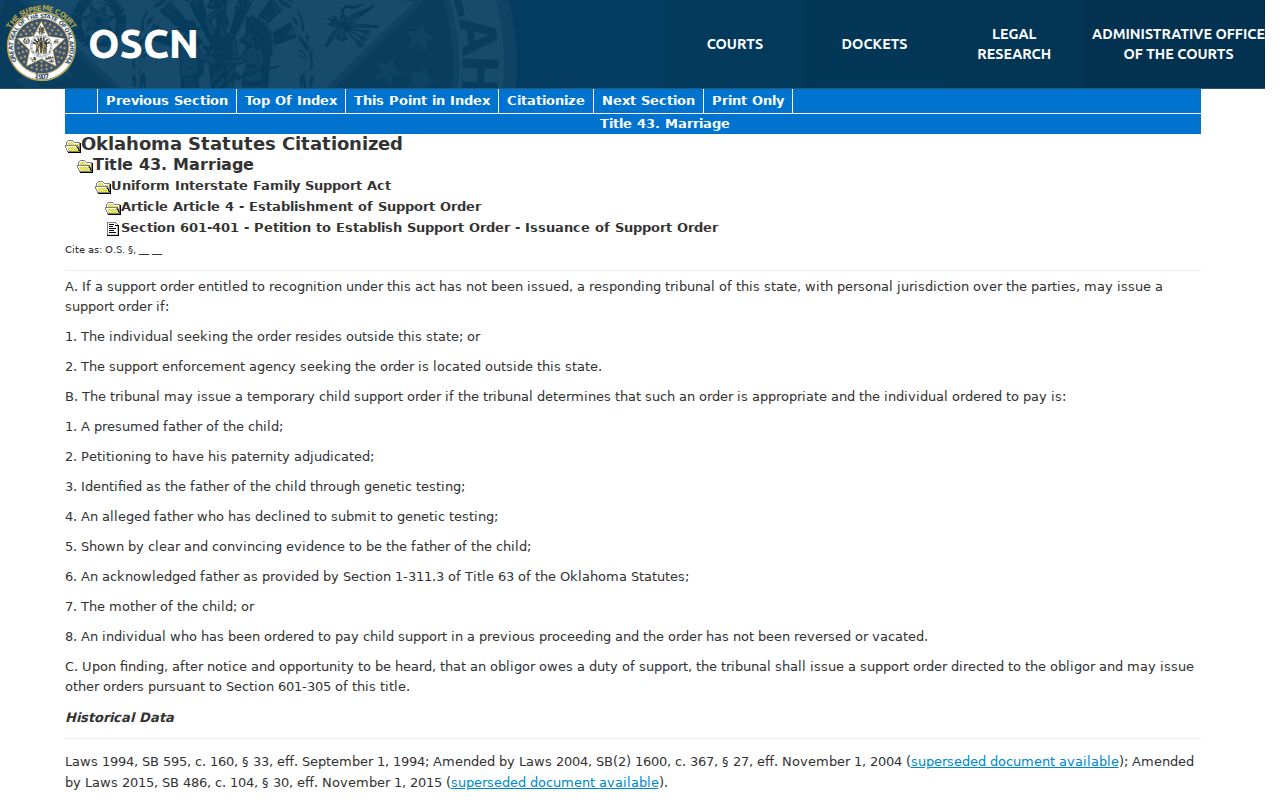
Its limits reinforce why a public warrant search cannot be treated as a complete view of protected juvenile process.
Oklahoma Crime Stoppers Tips
Crime Stoppers and wanted-person tip programs operate through local or regional channels. They help the public send information to the responsible agency, but they are not warrant-confirmation services. Use only the current tip method published by the relevant Oklahoma police, sheriff, or Crime Stoppers program. Do not confront a listed person, and call emergency services when there is an immediate threat.
A tip can aid law enforcement, yet it cannot tell the subject how to resolve an order or prove that a public listing is current. Those questions still belong to the issuing court, sheriff, and counsel. Never submit a false tip, impersonate another person, or use a reward program as a substitute for direct safety reporting.
Oklahoma Warrants After Arrest
After execution, the county jail roster may show the booking, listed charges, bond, holds, and arresting agency. Those fields describe custody and allegations, not guilt. The District Court file then records the filed case and court orders. A person transferred after sentence may later appear in the Department of Corrections system, but ODOC is not a warrant database.
For a recent arrest, use the Oklahoma inmate search routes and contact the jail. For an older warrant, booking sheet, or releasable sheriff record, send a precise Open Records Act request to the possessing agency. Finally, revisit the directory of all 77 Oklahoma counties and repeat the check for every implicated jurisdiction. Only direct current verification can close the loop.