
What Is an Oklahoma Court Docket?
A docket is the official running index of a case. Each entry pairs a date and event code with text that describes a filing, appearance, order, reassignment, payment, warrant, or disposition. The docket is not the same as the full case file. A line can state “Document Available at Court Clerk's Office” while no PDF is attached. The Court Clerk keeps the filed instrument and can provide inspection or a copy subject to access rules.
District Court dockets cover general trial jurisdiction in all 77 counties, including civil, criminal, family, probate, guardianship, small claims, protective-order, and state traffic matters. Appellate dockets track briefs, motions, orders, opinions, record transmission, and mandates. Most municipal courts are not courts of record and use city systems. Oklahoma City and Tulsa operate Municipal Criminal Courts of Record, but their city files still should not be confused with county District Court dockets.
Find Oklahoma Court Dockets Online
Start at the free OSCN Docket Search. Choose the county or appellate court database first. A known number produces the most focused result. For a name search, begin with the surname and a reasonable filing-date range, then narrow with the first or middle name. Test aliases, former names, adjacent years, and another county when no result appears. OSCN depth varies because counties digitized at different times and legacy material may remain local.
- Open OSCN, then select the filing county or the proper Oklahoma appellate database.
- Enter the full case number, or use a surname with restrained date and case-type filters.
- Verify the caption, county, filing date, parties, and prefix before reading the event list.
- Read entries in date order and check later lines for recall, amendment, dismissal, correction, or appeal.
- Save the case number and ask the Court Clerk for any underlying document that is not downloadable.
The official OSCN case-information instructions show the docket access route.
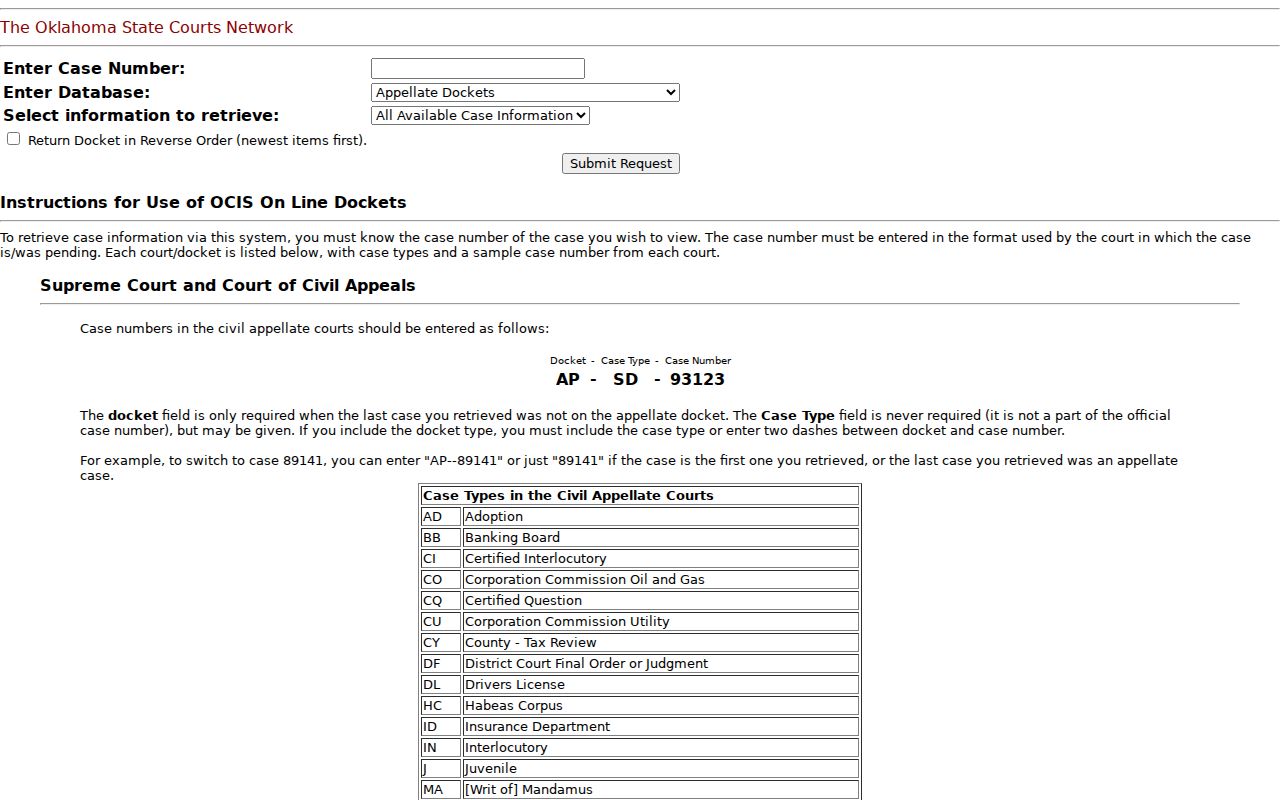
The interface supplies public event text, but the selected database and complete case number remain vital to an accurate match.
Sample Oklahoma Court Docket Entry
An inspected OSCN traffic docket shows how much information a short event list can carry. Its entries recorded the TR filing, automatic assignment and later reassignment, a court minute for failure to appear or pay, a bench warrant with issue and recall dates, conviction, traffic costs, and an OCIS assessment. That sequence illustrates a core rule: an earlier warrant line may be changed by a later recall, and a later disposition may resolve only one count.
| Field | What It Shows |
|---|---|
| Entry Date | The filing, hearing, order, payment, issue, recall, or disposition date tied to that line. |
| Event Code | A short label such as TEXT, CTFREE, BWIFA, CONVICTED, COSTT, or OCISR. |
| Narrative | Expanded event text, responsible party, count, judge action, or financial explanation. |
| Amount | Bond, cost, fine, restitution, assessment, or receipt tied to the event where shown. |
| Document Status | Whether an image is linked or must be requested from the Court Clerk. |
The official sample docket demonstrates this event sequence.
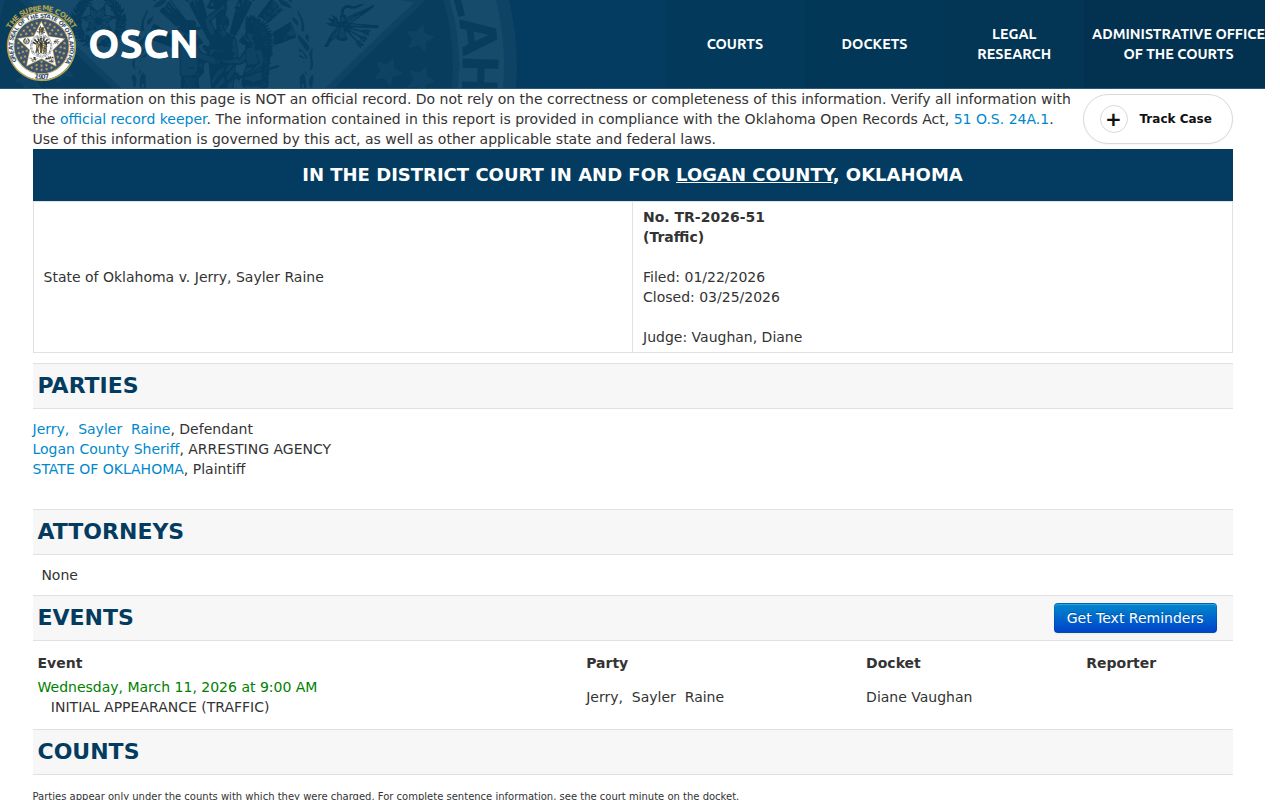
It also states that documents are available at the Court Clerk's office, proving why docket text and the full file must remain distinct.
Oklahoma Courts With Public Dockets
OSCN exposes publicly searchable Oklahoma District Court and appellate dockets. District Court cases begin at the Court Clerk in the proper county, and OCIS supports clerk operations while publishing public event data through OSCN. The statewide portal does not make every document remote. County public terminals, paper files, or microfilm may contain material that the internet view does not. Municipal, federal, and tribal matters require their own systems and custodians.
- District Court: OSCN docket data, with complete pleadings and certified copies from the county Court Clerk.
- State appellate courts: OSCN databases for the Supreme Court, Court of Civil Appeals, and Court of Criminal Appeals.
- Municipal courts: city clerk or city portal, since ordinance matters are generally outside comprehensive OSCN coverage.
- Federal courts: PACER for the three U.S. District Courts and their bankruptcy courts, with Tenth Circuit dockets for federal appeals.
- Tribal courts: the specific tribal court and clerk under that sovereign's access rules.
Oklahoma Docket vs. Case File
The Oklahoma docket answers what happened and when. The full case file shows what the parties filed and what the judge signed. A docket can summarize a motion without revealing its argument, list an order without supplying the image, or state a disposition without attaching the Judgment and Sentence. Exhibits and transcripts may have separate access limits. For a legal purpose, request the named document rather than relying on a screen print.
| Docket | Full Case Record | |
|---|---|---|
| Format | List of entries | Full documents |
| Access | Often online and free | May require fee or visit |
| Use | Track case progress | Legal review, evidence |
Read Oklahoma Court Docket Codes
Read each code with its narrative, count, date, and later entries. TEXT often marks automated or administrative text. CTFREE is a free-form court minute. BWIFA identifies a bench warrant tied to failure to appear, while issue and recall dates show whether the event changed. CONVICTED records a disposition, and cost codes identify particular assessments. Local usage can change, so a short code should never replace the expanded description or clerk confirmation.
Case prefixes identify the docket family: CF for felony, CM for misdemeanor, CJ or CV for civil, FD for dissolution or family, PB for probate, PG for guardianship, PO for protective order, SC for small claims, and TR for traffic. A dismissal might affect one count while another remains. Deferred, suspended, convicted, acquitted, and expunged are not synonyms. “Closed” can be administrative even when payment, supervision, appeal, or enforcement remains.
Note: Confirm a hearing with the clerk close to the date because continuances, reassignments, and data delays can change the online schedule.
Oklahoma Docket Hearings and Outcomes
Settings may show an initial appearance, preliminary hearing, arraignment, motion hearing, pretrial conference, trial, sentencing, or civil hearing. Assignment and reassignment entries explain which judge handles a matter, but the served notice or signed order controls a party's obligation. Never ignore an appearance because a remote page is blank or slow to update. Call the Court Clerk when a location, date, or courtroom is unclear.
Final outcomes require the right instrument. In a criminal case, the Information states filed allegations and the Judgment and Sentence states the conviction and imposed term. In a civil case, the judgment or dismissal order supplies the operative result. An appellate mandate returns authority to District Court. Later modification, enforcement, revocation, correction, or expungement can add new events after an apparent closure.
Federal Court Dockets in Oklahoma
OSCN does not search federal cases. PACER supplies federal docket and document access for Oklahoma's Northern, Eastern, and Western U.S. District Courts, their bankruptcy courts, and the Tenth Circuit. Registration and billing policies apply. A state dispute and related federal bankruptcy can have separate numbers and event histories, so both systems may need review.
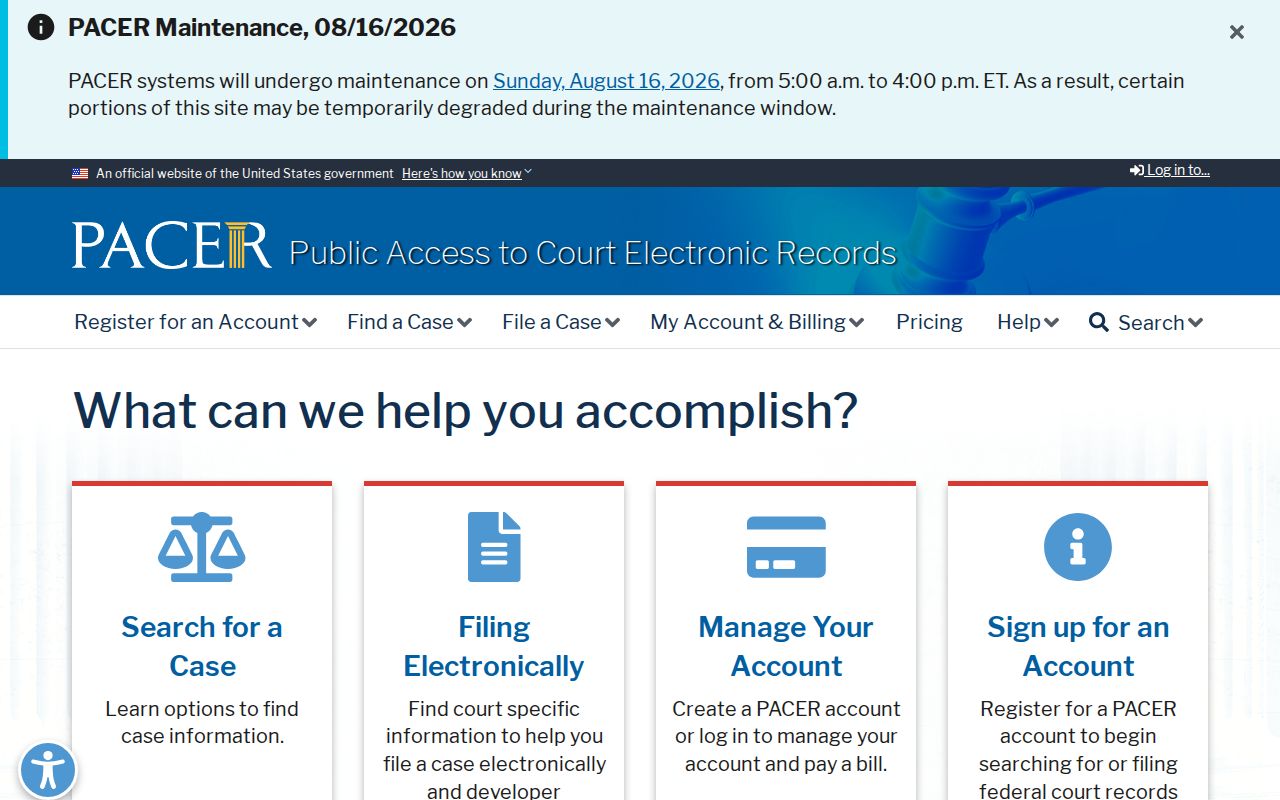
PACER is the official federal route, while a state District Court docket remains in OSCN and with the filing county's Court Clerk.
Obtain Oklahoma Court Docket Records
Use the Oklahoma county directory after identifying the filing venue. Give the Court Clerk the complete case number, party names, approximate year, and exact document or certified docket requested. Ask whether the record is public, whether advance archive retrieval is needed, and what copying, certification, postage, and payment rules apply. County practices for mail, email, fax, and counter service vary.
A municipal ticket goes to the issuing city's court clerk. An appellate record goes to the relevant appellate clerk. If an OSBI criminal history lacks a court disposition, obtain a certified disposition from the county Court Clerk and follow OSBI's update process. That correction does not occur by changing an OSCN page alone.
For an older Oklahoma docket, tell the clerk the approximate year and case family. The surviving source may be a bound appearance docket, microfilm, archived packet, transferred appellate record, or a local index that never became remotely searchable. Ask what index survives before assuming that a blank online result means the case was destroyed or sealed. Historical spelling, initials, and prior names can also change the search result.
For a current case, refresh the Oklahoma docket before a consequential decision. A saved page reflects one moment. New settings, corrections, payments, warrant recalls, mandates, or post-judgment orders can follow. Certified copies prove what the custodian certified when issued, but they do not guarantee that no later order exists. When timing matters, compare the latest OSCN event with the signed order and confirm current status with the Court Clerk.
Access can also fail because of maintenance, browser privacy settings, or a mobile form problem. Use a courthouse public terminal, a phone inquiry, or a written request rather than automated scraping. A person needing disability or language access should contact the court's official coordinator. These fallbacks keep Oklahoma court docket access tied to the responsible public office.
Keep the clerk's estimate, receipt, produced file name, and request date. Those details show which Oklahoma docket version was checked and which official document was supplied.