
Oklahoma Court System Overview
Oklahoma uses a bifurcated top tier. The nine-justice Supreme Court of Oklahoma is the final state tribunal for civil cases and has broad administrative control over the judiciary. The five-judge Oklahoma Court of Criminal Appeals finally decides state criminal appeals. The Oklahoma Court of Civil Appeals supplies intermediate civil review through 12 judges sitting in four divisions. District Court is the general trial court in every county.
Civil appeals invoke Supreme Court jurisdiction. The Supreme Court may retain an important matter or assign it to a Court of Civil Appeals panel, then consider a later petition for certiorari. Criminal appeals travel directly from District Court to the Court of Criminal Appeals because Oklahoma has no intermediate criminal appellate court. Most municipal courts are not courts of record, so their appeals are tried anew in District Court. Oklahoma City and Tulsa have Municipal Criminal Courts of Record and follow record-based routes.
Civil appeals: District Court › Supreme Court assignment › Court of Civil Appeals › rehearing and possible Supreme Court certiorari
Criminal appeals: District Court › Oklahoma Court of Criminal Appeals
| Court Level | Court Name | Jurisdiction / Case Types | Number in Oklahoma |
|---|---|---|---|
| Civil Court of Last Resort | Supreme Court of Oklahoma | Final civil review, original writs, and statewide judicial administration | 1 court, 9 justices |
| Criminal Court of Last Resort | Oklahoma Court of Criminal Appeals | Final review of state criminal convictions, sentences, post-conviction matters, and writs | 1 court, 5 judges |
| Intermediate Civil Appellate | Oklahoma Court of Civil Appeals | Civil appeals assigned by the Supreme Court | 4 divisions, 12 judges |
| General Trial Court | District Court | Civil, criminal, family, juvenile, probate, small claims, and state traffic | Present in all 77 counties |
| City Trial Court | Municipal Court | City ordinance violations, including many traffic matters | Varies by municipality |
| Specialized Tribunal | Court of Tax Review and Workers’ Compensation Court of Existing Claims | Tax levy protests and remaining legacy workers’ compensation claims | Statewide specialized jurisdiction |
Oklahoma's Two High Courts
The Supreme Court of Oklahoma decides final state civil questions, including appeals involving torts, contracts, family property, probate, agencies, and constitutional civil issues. It can exercise original jurisdiction over specified extraordinary writs and has superintending and administrative control over inferior state courts. Its civil opinions govern lower Oklahoma courts. Most ordinary civil appeals may be assigned to the Court of Civil Appeals, but the Supreme Court can later grant certiorari.
The Oklahoma Court of Criminal Appeals is not a division of the Supreme Court. It is the final tribunal for felonies, misdemeanors, post-conviction cases, extraordinary criminal writs, and death judgments. A standard instruction to “appeal to the state supreme court” is therefore wrong for an Oklahoma criminal conviction. The two high courts split by subject, not geography, and each maintains its own appellate record.
Oklahoma Court of Civil Appeals
The Court of Civil Appeals has four divisions, with two based in Oklahoma City and two in Tulsa. Its 12 judges sit in three-judge panels and decide civil appeals assigned by the Supreme Court. These are not four permanent geographic districts with fixed county maps. A party may seek panel rehearing and then petition the Supreme Court for certiorari. That assignment and review structure distinguishes Oklahoma from states where territorial appellate districts receive appeals directly.
| Division | Seat | Assignment |
|---|---|---|
| Division I | Oklahoma City | Civil cases assigned by the Supreme Court |
| Division II | Oklahoma City | Civil cases assigned by the Supreme Court |
| Division III | Tulsa | Civil cases assigned by the Supreme Court |
| Division IV | Tulsa | Civil cases assigned by the Supreme Court |
Oklahoma District Courts
District Court is Oklahoma's general-jurisdiction trial court. It handles felony and misdemeanor prosecutions under state law, civil actions, divorce and family disputes, juvenile proceedings, probate, guardianships, small claims, protective orders, and state traffic cases. Probate is a District Court docket, not a separate elected court. Administrative divisions can organize busy calendars, but the local Court Clerk remains custodian of the unified District Court record.
Every county retains its courthouse, associate district judge, Court Clerk, case database, and docket even when a district judge works across county lines. Special judges often conduct initial appearances, preliminary hearings, misdemeanor and traffic settings, protective orders, small claims, and family calendars. The official judiciary diagram reports 75 district judges, 77 associate district judges, and about 89 special judges, but the current annual report should be checked for staffing changes. Trial records route through the county directory.
Oklahoma Court Jurisdiction Compared
Oklahoma does not split ordinary state trial jurisdiction among separate county and justice courts. District Court has general jurisdiction and uses district, associate district, and special judges. Municipal courts exercise city ordinance jurisdiction. Specialized tribunals remain limited to their assigned subjects. The comparison focuses on that real Oklahoma structure.
| District Court | Municipal Court | State Specialized Tribunal | |
|---|---|---|---|
| Main Work | General state civil and criminal trial jurisdiction | City ordinance violations | Tax levy protests or remaining legacy compensation claims |
| Family and Probate | Yes | No | No |
| Criminal Reach | State felonies and misdemeanors | Municipal offenses | None in listed tribunals |
| Record Custodian | County Court Clerk | Municipal clerk | Tribunal clerk |
| Review | Civil or criminal appellate path by subject | Often trial de novo; record route for OKC and Tulsa courts of record | Route set by governing law |
Oklahoma Court Appeals Paths
A state case begins with the proper filing or accusation in District Court. Criminal defendants receive an initial appearance and, in felony matters, a preliminary hearing unless waived before bind-over and arraignment. Civil cases proceed from petition and service through answer, motion practice, discovery, trial or other disposition, and judgment. Appeals separate by subject at the top.
Criminal case flow: Arrest or charge › Initial appearance › Preliminary hearing or waiver › Bind-over and arraignment › Plea or trial › Judgment and Sentence › Oklahoma Court of Criminal Appeals
Civil case flow: Petition › Service and answer › Motions and discovery › Trial or disposition › Judgment › Supreme Court jurisdiction › possible Court of Civil Appeals assignment › possible Supreme Court certiorari
Municipal case flow: City citation › Municipal adjudication › trial de novo in District Court for most not-of-record courts, or the prescribed record-based appeal from Oklahoma City and Tulsa courts of record
Oklahoma District Court Divisions
District Court calendars may be organized into civil, criminal, domestic, juvenile, probate, guardianship, small-claims, and traffic work. Large counties can specialize assignments, while a smaller county may use the same judges for several subjects. These are administrative docket divisions within District Court. They do not create separate constitutional courts or separate elected record offices.
Problem-solving dockets can include drug, mental-health, veterans, family-treatment, and DUI courts, depending on local authority and funding. They remain within District Court. Juvenile and adoption material receives special confidentiality, and guardianship files can combine public appointment orders with restricted medical evaluations. The Court Clerk applies the governing order and access rule to each record.
Oklahoma Municipal and Special Courts
Municipal courts hear violations of city ordinances, including many traffic citations and city misdemeanors. Most are not courts of record, so an appeal receives a new trial in District Court rather than review of a full municipal transcript. Oklahoma City and Tulsa are the notable Municipal Criminal Courts of Record. Their cases should be searched through the named city court, not assumed to appear in the county District Court database.
The Court of Tax Review hears protests concerning tax levies. The Workers’ Compensation Court of Existing Claims handles matters remaining within its legacy jurisdiction. These tribunals do not replace District Court for ordinary civil, criminal, family, or probate cases. Tribal courts also exercise authority under tribal and federal law and keep their own records.
Federal Courts Across Oklahoma
Oklahoma has Northern, Eastern, and Western U.S. District Courts. They hear federal crimes, federal-question and diversity civil actions, civil-rights cases, and other matters assigned by Congress. Each district has a corresponding bankruptcy court. Appeals go to the U.S. Court of Appeals for the Tenth Circuit. These courts do not replace Oklahoma District Court for state prosecutions, divorce, or probate.
The Northern District of Oklahoma provides official federal court and clerk access for its venue.
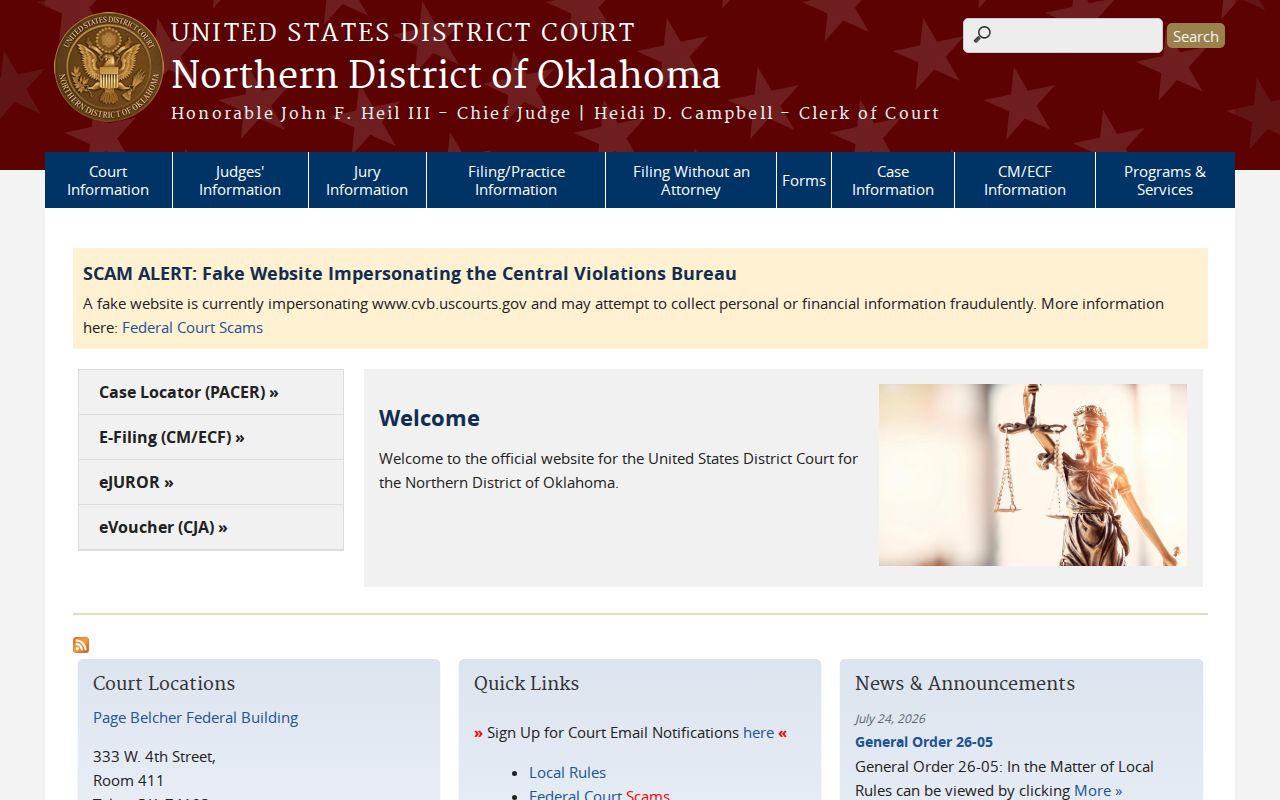
Its docket is federal and must be searched through PACER, not OSCN or a county Court Clerk.
The Eastern District of Oklahoma serves its federal venue from the eastern part of the state.
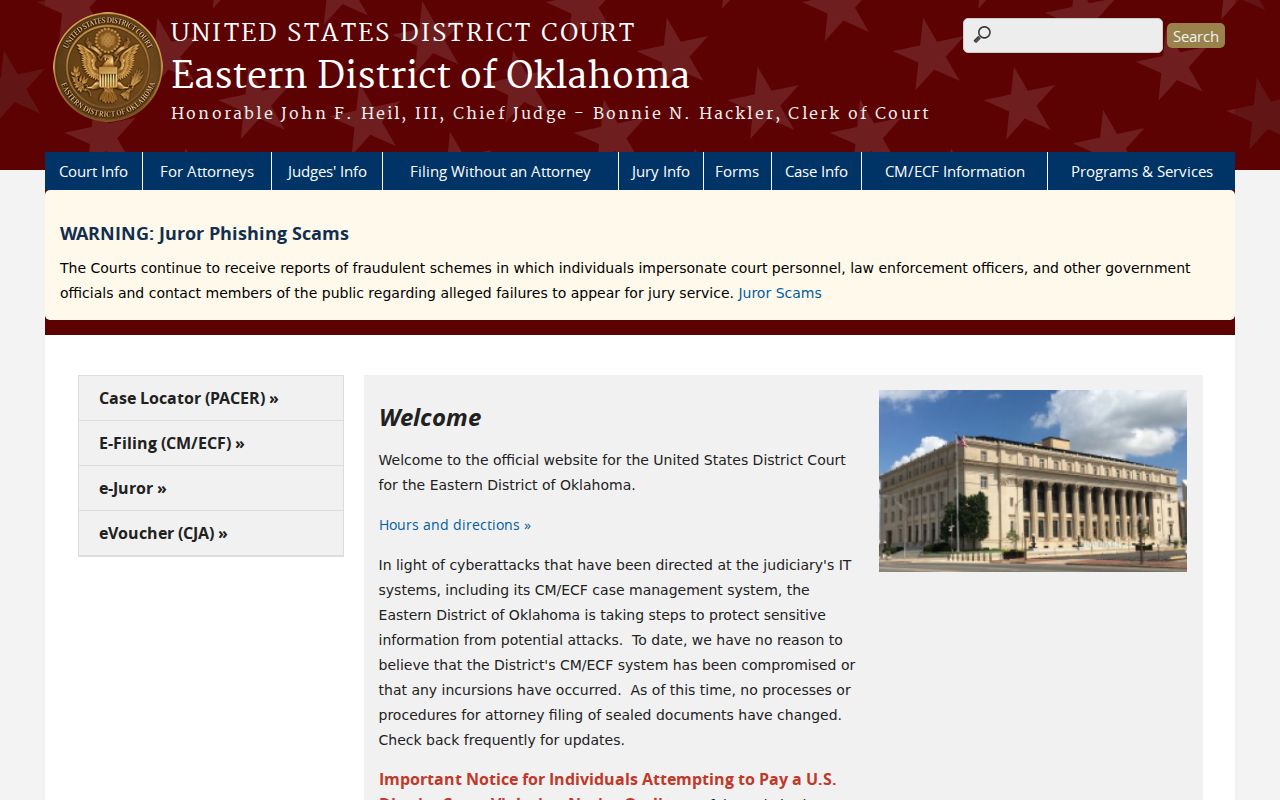
Exact county allocations should be checked on the federal court locator because venue boundaries determine the correct district.
Appeals from all three federal districts go to the U.S. Court of Appeals for the Tenth Circuit.
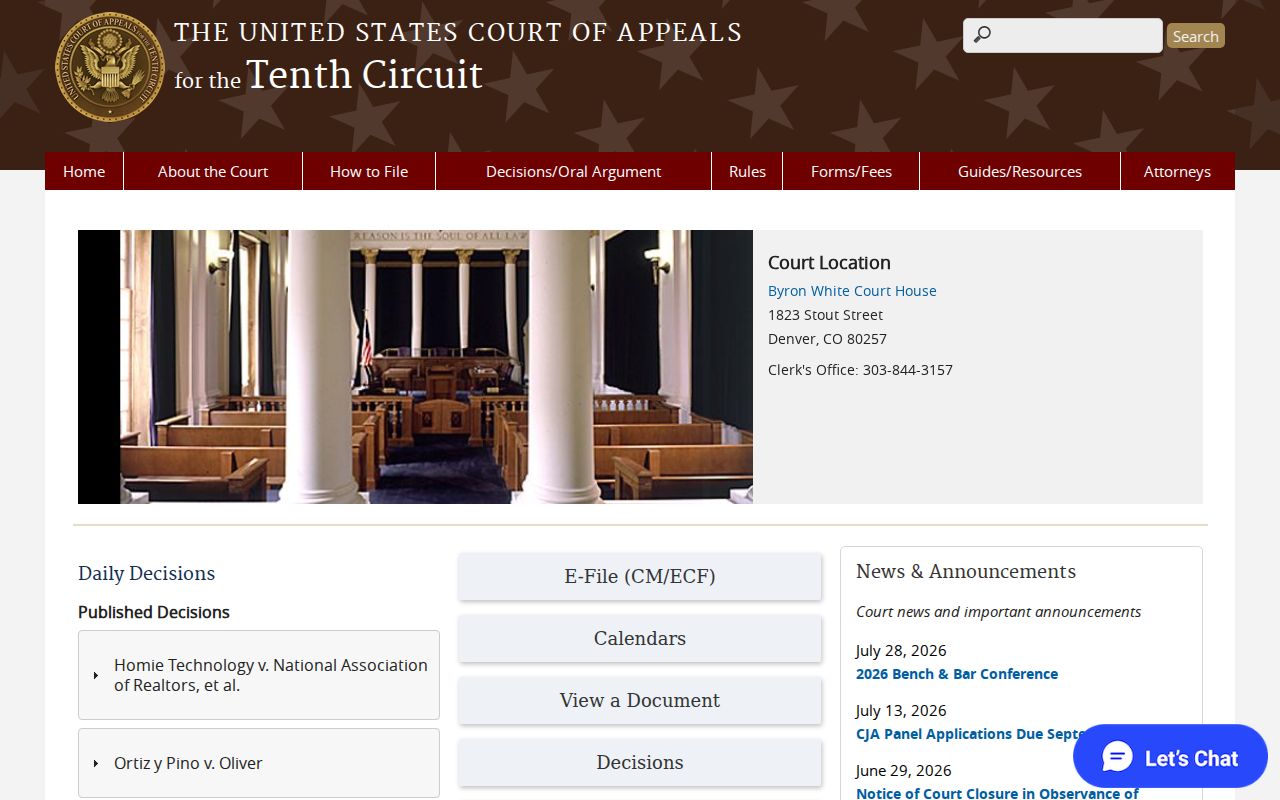
The Tenth Circuit is part of the federal hierarchy and is separate from both Oklahoma state high courts.
History of Oklahoma Courts
Statehood in 1907 established Oklahoma's constitutional judiciary. The modern dual-last-resort arrangement places civil final review in the Supreme Court and criminal final review in the Court of Criminal Appeals. The 1967 judicial article and later reforms reorganized selection and administration, strengthened the unified District Court system, and confirmed broad Supreme Court superintending authority.
OCIS and OSCN later joined clerk case management with free public dockets, statutes, rules, opinions, and legal research. That public network is broader than a bare commercial index, but county digitization still affects depth and document images. The elected Court Clerk remains the legal custodian of trial files even when OSCN publishes the docket.
Find an Oklahoma District Court
District Court records belong to the Court Clerk in the filing county. Browse the directory of all 77 Oklahoma counties to reach the correct local court route. Use the municipal clerk for a city ordinance matter, the appellate clerk for an appeal, and the federal clerk for a U.S. court case. Matching the sovereign, court level, and venue prevents a search in the wrong system.