
Search Oklahoma Court Records Online
The OSCN Docket Search is the main public gateway for Oklahoma District Court and appellate docket data. It is free and generally needs no account. Searchers select the county or appellate court database before entering a case number or party name. The result can identify parties, counsel, judge, filing dates, counts, scheduled settings, event text, money entries, warrants, and disposition. OSCN also links to Oklahoma statutes, rules, and appellate opinions, which makes it broader than a basic county index.
OSCN is not a complete packet of every Oklahoma court record. Older files may remain on paper or microfilm, and a docket line may say that a document is available only at the Court Clerk's office. Municipal ordinance and city traffic matters are also generally outside comprehensive OSCN coverage. Start with a full name, likely filing county, approximate year, and case type. A known case number is best. When the county is uncertain, repeat the name search across likely databases and test former names or spelling variants.
- Open OSCN and choose the county, Supreme Court, Court of Civil Appeals, or Court of Criminal Appeals database that should hold the case.
- Enter the exact case number when known. Otherwise, search the surname with a restrained filing-date range and add a first name only as needed.
- Open a result and verify its caption, filing date, venue, parties, and case type before relying on any event.
- Record the canonical case number and identify the exact pleading, order, judgment, or exhibit needed from the filing county.
- Contact that county's Court Clerk for inspection, a plain copy, certification, or archive retrieval when OSCN does not supply the document.
Oklahoma Court Records Search Fields
The OSCN form supports both direct number searches and broader party searches. County or court selection is functionally required because identical number patterns can occur in different venues. Date and case-type filters reduce false matches, but too many filters can hide a valid result. Public date-of-birth detail may be limited. The form fields below reflect the statewide interface; a local municipal portal may use different controls.
| Field Label | Type | Required | Notes / Format |
|---|---|---|---|
| County or Court | Dropdown | Functionally yes | Select the filing county or the correct appellate court database. |
| Case Number | Text group | No | Use the filing year, case type, and sequence shown by OSCN. |
| Last, First, Middle Name | Text | No | Surname is the broadest start; added names narrow results. |
| Date of Birth Range | Date | No | Availability and public detail may be limited. |
| Filed or Closed Date Range | Date | No | Use a reasonable window when the year is only approximate. |
| Case Type | Dropdown or text | No | Common codes include CF, CM, CJ, CV, FD, PB, PG, PO, SC, and TR. |
The Oklahoma Office of Vital Records page also helps prevent a common routing error.
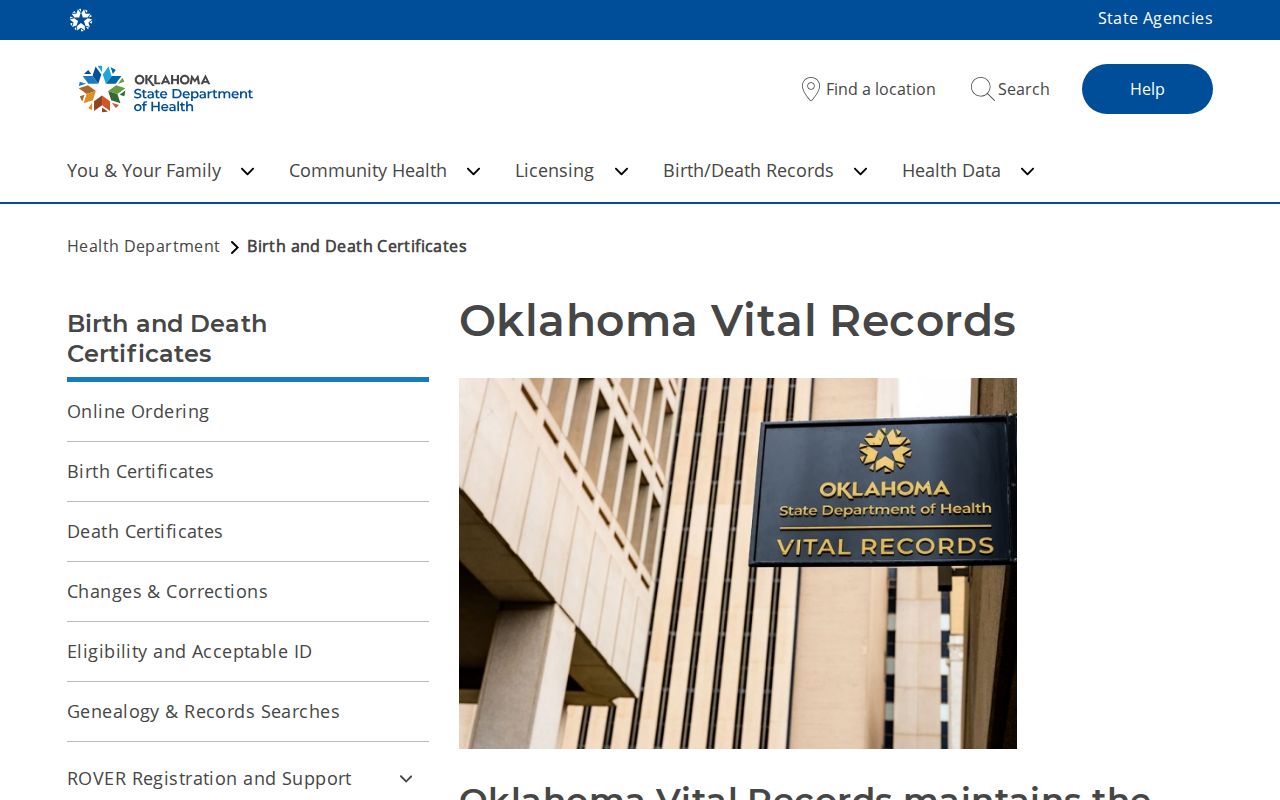
That state office handles birth and death certificates, while marriage and divorce documents are obtained from county Court Clerks, reinforcing the need to identify the correct custodian.
Types of Oklahoma Court Records
Oklahoma District Court has general jurisdiction, so one county Court Clerk can hold a wide range of case files. Civil CJ or CV files may include petitions, service returns, answers, orders, judgments, garnishments, and satisfactions. Criminal CF and CM files may contain the probable-cause affidavit, Information or indictment, bond orders, pleas, motions, verdict, Judgment and Sentence, and financial assessments. Family FD records can include petitions, temporary orders, parenting plans, decrees, and later enforcement or modification.
Probate PB and guardianship PG proceedings are District Court dockets, not records of a separate probate court. State traffic matters commonly use TR, while a city ordinance citation belongs to the municipal clerk. Appellate records contain the petition in error, briefs, orders, opinions, and mandate. Some categories remain restricted even when an ordinary civil or criminal docket is public.
- Civil and small claims: petitions, service, rulings, judgments, collections, and satisfaction entries.
- Criminal: filed allegations, hearing history, plea or verdict, disposition, sentence, and costs.
- Family and protective orders: divorce, custody, support, paternity, and protection proceedings with sensitive fields withheld.
- Probate and guardianship: estate petitions, wills, notices, inventories, fiduciary orders, accounts, and distribution decrees.
- Traffic and municipal: state citations in District Court and separate city cases in the issuing municipal court.
What Oklahoma Court Records Show
An Oklahoma court record identifies the venue and case before it reports events. Case numbers usually combine a prefix, filing year, and sequence, but the county is a separate database dimension. Read the caption, party roles, count number, and expanded event narrative together. A docket code alone can mislead. “Disposed” means trial-level activity reached a resolution; it does not prove that all money is paid, an appeal ended, or a record was expunged.
| Field | What It Shows |
|---|---|
| Case Number | Case-type prefix, filing year, and sequence, read with the selected county or court database. |
| Parties and Counsel | Names, roles, attorneys, and bar information where displayed. |
| Judge and Dates | Assignment, reassignment, filing, closure, settings, continuances, and event dates. |
| Counts and Narrative | Charge or claim text, statute reference, responsible party, and amended count history. |
| Disposition | Dismissal, plea, verdict, conviction, deferred result, judgment, or other recorded outcome. |
| Money and Process | Bond, fines, costs, restitution, receipts, warrants, service, and enforcement entries. |
For federal opinions and donated PACER documents, CourtListener and RECAP provide a useful free research alternative.
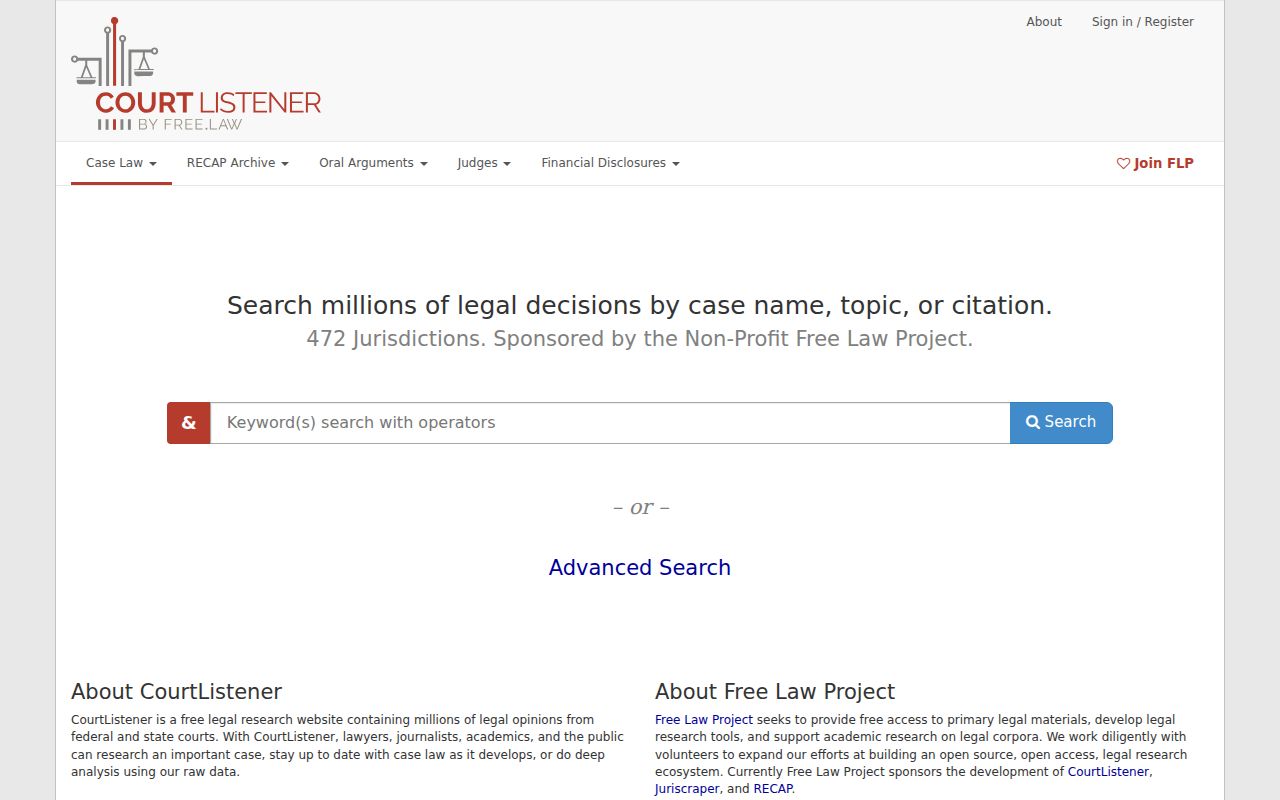
RECAP coverage is opportunistic and cannot certify completeness, so an official federal docket still requires PACER or the federal clerk.
Oklahoma Court Records Access Law
The Oklahoma Open Records Act, 51 O.S. §§24A.1 through 24A.32, supports prompt and reasonable access to public-body records unless another law makes material confidential. Court-file access also depends on judicial rules and orders. The most precise route for an existing case document is direct Court Clerk inspection, not a broad request to a state office. A request should name the case, document, date range, desired format, and cost ceiling.
12 O.S. §32.1 requires specified personal identifiers to be left out or redacted from court filings. This is different from sealing an entire file. The custodian should withhold the protected field and release the segregable public balance when possible. Copying, media, postage, archive work, and qualifying search time can result in charges; exact amounts and payment methods should be confirmed with the county Court Clerk before an order is placed.
The Oklahoma State Library maintains an official collection of Open Records Act materials.
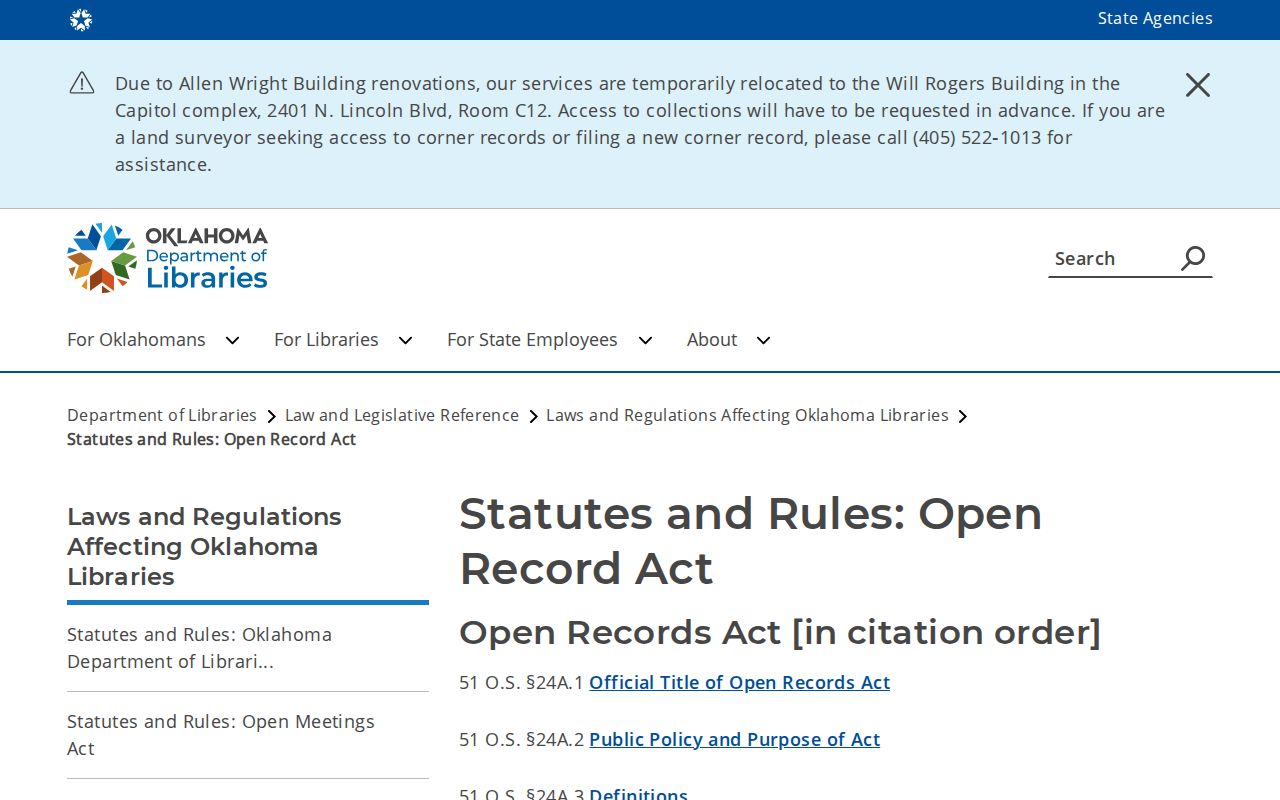
The collection helps distinguish agency-record procedures from the Court Clerk process used for a filed Oklahoma case.
Note: Public access to docket text does not create a right to download every pleading, exhibit, or confidential attachment.
Restricted Oklahoma Court Records
Juvenile delinquency and deprived-child files are not ordinary public court records. Adoption petitions, reports, identifying material, and decrees are confidential. Mental-health evaluations, treatment evidence, protected victim or child addresses, tax returns, and full financial identifiers may also be withheld. Family and guardianship dockets can remain visible while sensitive attachments are restricted. A missing name search therefore does not prove that no Oklahoma proceeding exists.
Expungement under 22 O.S. §18 and the related effect and procedure in 22 O.S. §19 depend on the exact arrest, filing, outcome, waiting rule, and later history. Relief is not automatic. A petition is filed in the proper court, notice goes to affected agencies, and the signed order defines its reach. Separate custodians can hold separate copies. Redaction, a protective order, sealing, expungement, a deferred sentence, and a pardon have distinct legal effects.
The official personal-identifier statute shows the court filing rule in its current citationized form.
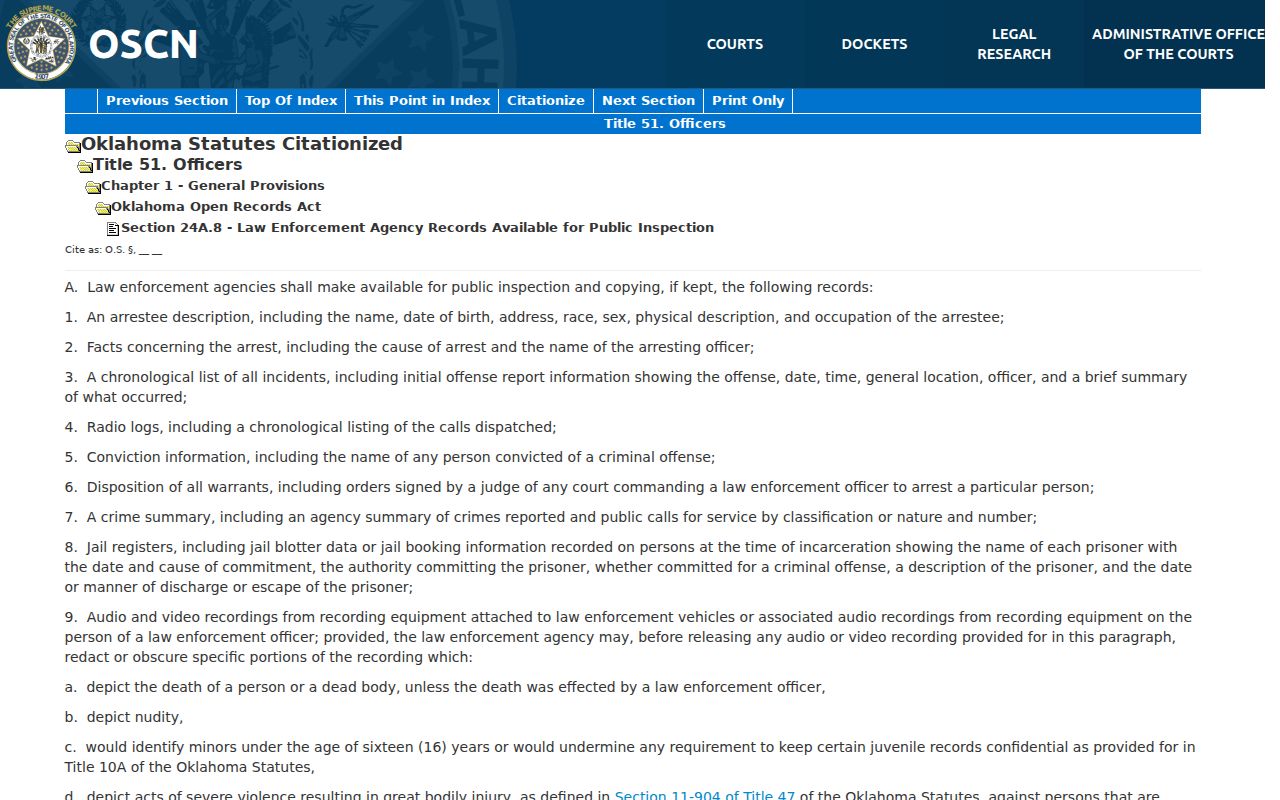
Its redaction requirements protect specified data without making every otherwise public Oklahoma court record confidential.
Get Oklahoma Court Record Copies
Use OSCN to identify the file, then ask the Court Clerk for the exact instrument. A plain copy or printed docket is useful for research. A certified copy bears the clerk's attestation and seal and is often needed for enforcement, immigration, a legal name change, or proof to another agency. Authentication or exemplification adds formal signatures or seals for use in another jurisdiction. The clerk can quote the correct product, copy charge, certification charge, postage, and archive cost.
Requests may be made at the counter and, depending on county practice, by mail, email, or fax. Include the case number, party names, approximate year, exact document, plain or certified status, delivery method, contact information, and a maximum cost authorization. Older bound volumes, microfilm, exhibits, and off-site files may need advance retrieval. Never send sensitive identity data by ordinary email unless the official clerk gives a secure method.
Find an Oklahoma Court Records Office
Each of Oklahoma's 77 counties has an elected Court Clerk who keeps District Court files. Use the Oklahoma county directory to reach the filing county. Confirm that the office is the Court Clerk, not the separate County Clerk that generally handles deeds and county-government records. For a city ordinance ticket, contact the municipal court clerk instead. Appellate briefs, opinions, orders, and mandates belong to the proper appellate clerk.
After a failed remote search, identify the jurisdiction, save the exact case number, and request the named document. County staff can explain access, payment, and retrieval steps but cannot provide legal advice. The Oklahoma Court Clerk overview explains certification and office duties without substituting for the local office's current instructions.
Tip: Match the county, case prefix, filing year, and sequence before ordering an Oklahoma court record from a clerk.